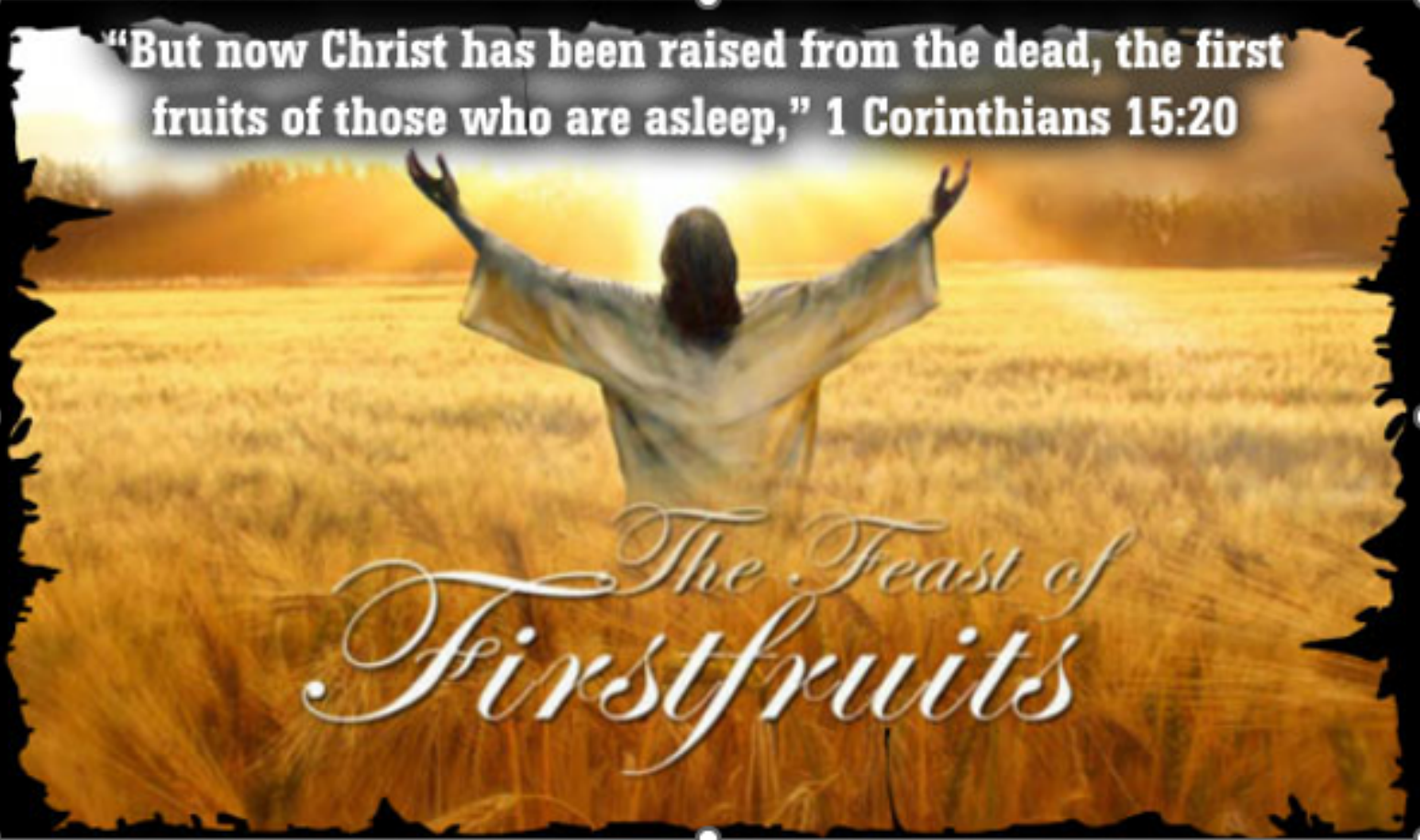
In 1 Corinthians 15 Paul declares, “But Christ has indeed been raised from the dead, the firstfruits of those who have fallen asleep. … But each in turn: Christ is the firstfruits; then when he comes, those who belong to him.” This is a promise that those who belong to Christ will be raised up in resurrection bodies when He returns. A study of the feasts of Israel sheds light upon the historical and prophetic significance of the Resurrection and its meaning for our lives here and now.
1 Corinthians 15 (NKJV)
20 But Christ has indeed been raised from the dead, the firstfruits of those who have fallen asleep. 21 For since death came through a man, the resurrection of the dead comes also through a man. 22 For as in Adam all die, so in Christ all will be made alive. 23 But each in turn: Christ, the firstfruits; then, when he comes, those who belong to him.
The feasts of Israel were also called God’s “appointed times”. The appointed time of Firstfruits came right after that of Passover and Unleavened Bread. John the Baptist speaking of Jesus in John 1:29, declares: “Behold! The Lamb of God who takes away the sin of the world!” Likewise, Paul refers to Jesus as “our Passover” in 1 Corinthians 5:7.
Sam Nadler writes in his book, “Messiah in the Feasts of Israel”, page 56,
“Just as Passover was to mark Israel’s redemptive beginning as a nation, so also the Lamb of God is your redemptive beginning when you believe in Yeshua.”
2 Corinthians 5:17 (NKJV)
Therefore, if anyone is in Christ, he is a new creation; old things have passed away; behold, all things have become new.
New abundant life begins the moment one truly receives Jesus as Lord and Savior. John 3:16 (NKJV) says, For God so loved the world that He gave His only begotten Son, that whoever believes in Him should not perish but have everlasting life.” Jesus says in John 10:10, “The thief does not come except to steal, and to kill, and to destroy. I have come that they may have life, and that they may have it more abundantly.”
Paul writes in Galatians 4:4, that when the set time had fully come, God sent his Son to bring us redemption and adoption to sonship.
Galatians 4 (NIV)
4 But when the set time had fully come, God sent his Son, born of a woman, born under the law, 5 to redeem those under the law, that we might receive adoption to sonship. 6 Because you are his sons, God sent the Spirit of his Son into our hearts, the Spirit who calls out, “Abba, Father.” 7 So you are no longer a slave, but God’s child; and since you are his child, God has made you also an heir.
The seven feasts, or appointed times, prophetically depict the times when the Messiah would be revealed to His people and the world. By keeping the feasts, Israel was rehearsing the times of the Messiah. The first four prophetic events have been fulfilled, the last three are yet to come.

In their book, “The Feasts of the Lord” (Nashville, 1997, Thomas Nelson, p. 44), Kevin Howard and Marvin Rosenthal give the following summary of the prophetic significance of the seven feasts (or “appointed times”) of the Lord.
| FEAST | DATE | SIGNIFICANCE |
| Passover | Nissan 14 Spring | Passover speaks of redemption, Messiah, the Passover Lamb, would be sacrificed for us. |
| Unleavened Bread | Nissan 15-21 Spring | Unleavened Bread speaks of sanctification. Messiah’s body would not decay in the grave. |
| Firstfruits | Nissan 16 Spring | Firstfruits speaks of resurrection. Messiah would rise triumphantly from the grave on the third day. |
| Weeks (Pentecost) | 50 days After Firstfruits Spring | Weeks/Shavuot speaks of origination. Messiah would send the Holy Spirit to inaugurate the New Covenant and Church Age. |
| Trumpets | Tishri 1 Fall | Trumpets/Rosh Hashanah points to the future day when the Messiah returns to rescue the righteous (Rapture) and judge the wicked. |
| Yom Kippur | Tishri 10 Fall | Yom Kippur / Day of Atonement points to the future day when Israel repents of her sins and turns to the Messiah for salvation. |
| Tabernacles | Tishri 15-21 Fall | Tabernacles/Sukkot points to the future day when the Messiah sets up the messianic Kingdom and tabernacles among men. |
The giving of God’s Son was prophetically pictured by the Feast of Passover. The deeper meaning of the Feast of Passover was fulfilled when Jesus laid down his life as an atoning sacrifice for the sins of the world. The seven day Feast of Unleavened Bread immediately followed the Feast of Passover. No yeast was allowed in this feast for this is a prophetic picture of the body of the Messiah not suffering decay. The Feast of Firstfruits occurred on the second day of the Feast of Unleavened bread and is a prophetic picture of the Resurrection of the Lord as the firstfruits of many to come.
God’s gift of the Law and the gift of the Spirit have both come to be associated with the feast of Pentecost. The Feast of Pentecost is celebrated seven weeks plus one day after the feast of Firstfruits. That is why this celebration is known in Hebrew as the Feast of “Weeks” (Shavuot). This feast was originally closely tied to agricultural seasons, but later became associated with the historical event of Moses’ receiving the Ten Commandments on Mt. Sinai. The Greek word for Pentecost means “fiftieth”, and it was called by that name in Acts 2:1.
Acts 2 (NKJV)
1 When the Day of Pentecost had fully come, they were all with one accord in one place. 2 And suddenly there came a sound from heaven, as of a rushing mighty wind, and it filled the whole house where they were sitting. 3 Then there appeared to them divided tongues, as of fire, and one sat upon each of them. 4 And they were all filled with the Holy Spirit and began to speak with other tongues, as the Spirit gave them utterance.
Jesus is our Passover Lamb, the Bread of Life and Firstfruits Resurrection for all who believe in Him. The timing of the Resurrection parallels the offering of the firstfruits in the temple, with its promise of God’s blessing for the harvest to come. In His first coming, we see the fulfillment of the Spring feasts and of Pentecost, when believers were baptized in the Holy Spirit. The prophetic fulfillment of the Fall Feasts – Trumpets, Day of Atonement and Tabernacles – will commence when He comes again. Jesus Christ, Yeshua the Messiah, continues to fulfill the Feasts of Israel.
Jesus said in John 6:35, “I am the bread of life. He who comes to Me shall never hunger, and he who believes in Me shall never thirst.” He says in John 6:51, “I am the living bread which came down from heaven. If anyone eats of this bread, he will live forever; and the bread that I shall give is My flesh, which I shall give for the life of the world.” As believers, we look forward to the prophetic fulfillment of the Fall Feasts, especially including the second coming of the Lord. God is helping us to get ready for that great day: 1 John 3:2-3, “Beloved, now we are children of God; and it has not yet been revealed what we shall be, but we know that when He is revealed, we shall be like Him, for we shall see Him as He is. And everyone who has this hope in Him purifies himself, just as He is pure.”
David Krause, dhkrause2@gmail.com, https://compellinglove.net/
 Compelling Love
Leave a comment